
25 Sep 2026


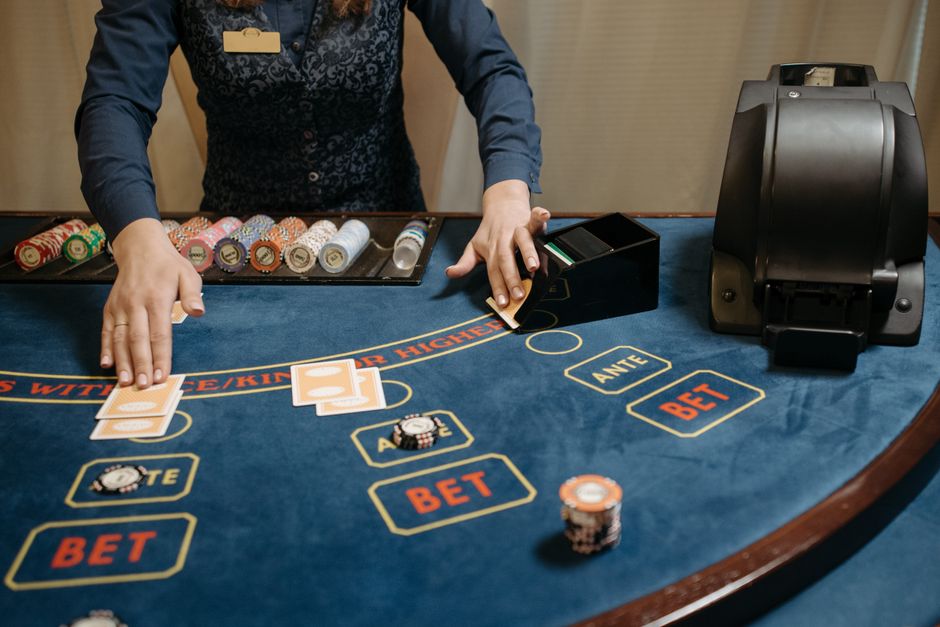
Every spin, every hand, every bet slips through your fingers in seconds. But behind that fleeting thrill sits a math machine that never sleeps, never tilts, and never feels sorry for your losing streak. The sooner you understand how that machine works, the sooner you stop playing like a tourist and start playing like someone who actually knows the terrain.
This isn't a lecture about quitting gambling. It's a field guide for anyone who wants to play slots, poker, or sports betting with a clear head. We'll talk about house edges, variance, table selection, and the habits that separate recreational players from the broke ones.
Casinos don't stay lit 24/7 out of generosity. Every game on the floor carries a built-in mathematical advantage for the operator, and that number dictates everything about your long-term results.
Here's the uncomfortable truth in concrete numbers. European roulette has a house edge of 2.7%, thanks to that single zero. American roulette doubles it to 5.26% because of the extra 00 pocket. Blackjack played with basic strategy can drop the edge to around 0.5%, which is why sharp players gravitate there. And slot machines? They vary wildly. A typical land-based slot might hold 5% to 10%, while some high-volatility online slots push the RTP (return to player) down toward 94% or even lower.
What does that mean in practice? If you cycle $1,000 through a game with a 5% house edge, you should expect to lose about $50 over time. You might win $300. You might lose the whole grand. But the math doesn't care about your feelings. Further details are available through สล็อตเว็บตรง.
Notice the outlier. Poker is the one game where you're not playing against the house — you're playing against other humans, and the house just takes a rake. That distinction matters enormously.
House edge tells you what happens over a million hands. Variance tells you what happens over the next hour, and that's the part that actually ruins people.
Imagine a coin-flip game with a 1% edge against you. Over 10,000 flips, you're nearly guaranteed to lose. But over 20 flips, you might win 14 of them and feel like a genius. That's variance — the short-term noise that masks the long-term signal.
Slot players feel this hardest. A slot with 96% RTP and high volatility might pay out 200x your bet once every 500 spins, but deliver nothing for the other 499. Players who don't understand this chase the payout with a shrinking bankroll, convinced the machine is "due." It isn't. Machines don't have memory. Each spin is independent, governed by a random number generator that has no idea you've been losing for an hour.
Poker variance is different but equally brutal. Even a player with a 5bb/100 win rate — a genuinely strong performance — can lose for 50,000 hands straight if the cards run cold. That's why bankroll management isn't optional. It's survival.
You can know every odds table by heart and still torch your account if you bet too big. Bankroll management is the quiet discipline that keeps you in the game long enough for your edge — if you have one — to matter.
Here's a practical framework:
These rules sound boring. Boring is what keeps you solvent. The players who treat gambling like an entertainment expense with a hard cap are the ones who last.
The iGaming world lumps these together, but they demand completely different mindsets.
Slots are pure entertainment with a fixed mathematical cost. You can't outplay a slot machine. You can only choose games with better RTPs, manage your session length, and accept that the outcome is random. Look for slots with published RTPs above 96% and avoid games where the max win is wildly disproportionate to the volatility — those tend to drain bankrolls faster than they fill them.
Poker rewards study, discipline, and emotional control. Track your hands, review your biggest losses, and study ranges rather than specific hands. The players who win consistently aren't luckier — they make fewer mistakes and exploit the mistakes of others. If you're not willing to study away from the table, you're donating to those who do.
Sports betting is about information and price. A bet is only good if the odds are better than the true probability. If you think a team has a 55% chance to win but the sportsbook offers even money, that's value. If they offer -150, it isn't. Line shopping across multiple books is one of the simplest edges available, and most casual bettors ignore it entirely.
Casinos are engineered to exploit cognitive biases, and they're very good at it.
The fix isn't willpower. It's structure. Pre-commit to limits before you play, use deposit restrictions if your platform offers them, and take real breaks. A 20-minute walk between sessions does more for your win rate than any hot streak.
The house wins because it has an edge, controls its variance, and never chases losses. You can't replicate the first advantage, but you can absolutely replicate the other two. Pick games with the lowest edges, bet sizes your bankroll can absorb, and treat every session as one small data point in a long series rather than a make-or-break moment.
iGaming can be genuinely fun — a night at the virtual tables, a Sunday afternoon sweating a parlay, a poker tournament with friends. But the players who enjoy it longest are the ones who respect the math, keep emotions out of the decision seat, and never forget that the house edge is always working, even when you're winning.

Field signs such as burrows, latrines and feeding stations reveal where water voles live, even when the animals stay hidden.

I must explain to you how all this mistaken idea of denouncing pleasure and praising pain was born and I will give you a complete account of the system
Reply
I must explain to you how all this mistaken idea of denouncing pleasure and praising pain was born and I will give you a complete account of the system
Reply
I must explain to you how all this mistaken idea of denouncing pleasure and praising pain was born and I will give you a complete account of the system
Reply
I must explain to you how all this mistaken idea of denouncing pleasure and praising pain was born and I will give you a complete account of the system
Reply


Small streams demand light tackle, careful casting and a quiet approach; this introduction covers the essentials for a first trip.
Contact Us
There are many variations of passages of No rushing, no fuss — just thoughtful notes and practical help, written by people who care.
Many desktop publi’s shing packages web page editors now is use sites.
Copyright © 2026 Brook & Bank. All rights reserved.Brook & Bank.
